Ember Season Is Also Scam Season: How to Keep Your Savings Safe

Money moves faster between now and December. People are contributing to thrift groups, sending money home, paying for travel and clearing debts before the year ends. Fraudsters know this too, which is why the ember months are always their busiest season.
In September, the Central Bank of Nigeria warned banks and fintechs that a weakness anywhere in the payment chain can spread across the whole system, and urged tighter security across the ecosystem. That warning was aimed at institutions, but the everyday version matters for you: the more money you are moving this season, the more careful you need to be about where it goes.
Here is how to protect your savings, and what we have just shipped on CircleFunds to make it easier.
1. Never Send Contributions to a Personal Account
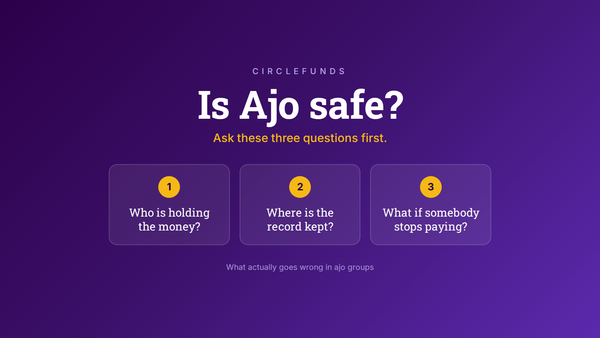
This is where most traditional ajo goes wrong. Money goes into one person’s personal account, and if anything happens to that person or that account, there is no record and no recourse.
On CircleFunds, contributions sit inside the platform, not in anybody’s pocket. We have now added Dedicated Virtual Accounts, which give you your own account number for funding your wallet directly in the app. You transfer to an account that belongs to you, and the money shows up in your wallet ready to contribute. If anyone ever asks you to send thrift money to a personal account instead, that is your signal to stop.
2. Lock Down How You Log In
Most account takeovers do not involve clever hacking. Somebody gets your OTP, usually because they asked for it and the victim shared it.
We have improved the login experience with smoother OTP and biometric sign in, so you can use your fingerprint or face instead of typing a code every time. Fewer codes floating around means fewer chances for someone to talk you into sharing one. Turn biometrics on, and remember the rule that never changes: nobody from CircleFunds will ever ask you for your OTP, PIN or password.
3. Verify the Group Before You Join It
Season of urgency means season of pressure. If someone rushes you into a savings group with promises that sound too good, slow down. On CircleFunds, thrift groups and savings targets are joined through the app, and every plan shows its status clearly. If you cannot see the plan inside the app, it is not a plan.
4. Keep Your Goal Money Out of Reach
Money sitting loose in an account is easier to spend and easier to lose. A Target Savings plan commits your money until the maturity date you choose, and it earns up to 15% a year while it waits. That rate is annual and worked out for how long you actually hold the money, so a short plan earns a proportional share rather than the full figure.
We have also made improvements to Target Savings and Community Thrift in the app, so setting up a plan, tracking it and contributing to it is cleaner than before, along with the usual round of bug fixes and performance work.
5. Check Your Activity Regularly
Open the app once a week and look at your contributions and plan status. Fraud is far easier to fix when it is caught in days rather than months, and a quick look also keeps you honest about whether you are still on track for December.
What to Avoid
- Sharing your OTP, PIN or password with anyone, including someone claiming to be support
- Sending thrift or target contributions to an individual’s personal account
- Joining a savings group you cannot find inside the app
- Clicking payment links sent to you in a rush, especially around payday and festive weekends
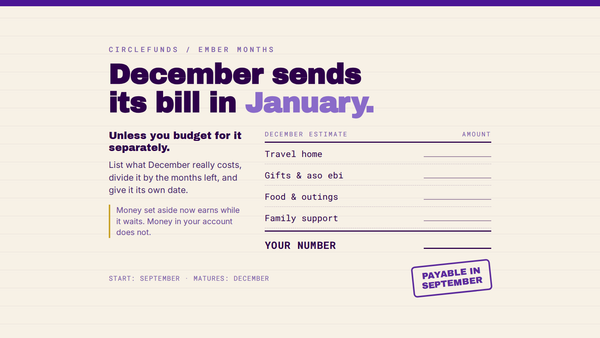
- Leaving your December money loose in an account where it is easy to spend
Save Smart, Stay Safe
The safest savings season is a planned one. Fund your wallet through your dedicated account, turn on biometric login, keep your December money in a plan with a date on it, and check in weekly.
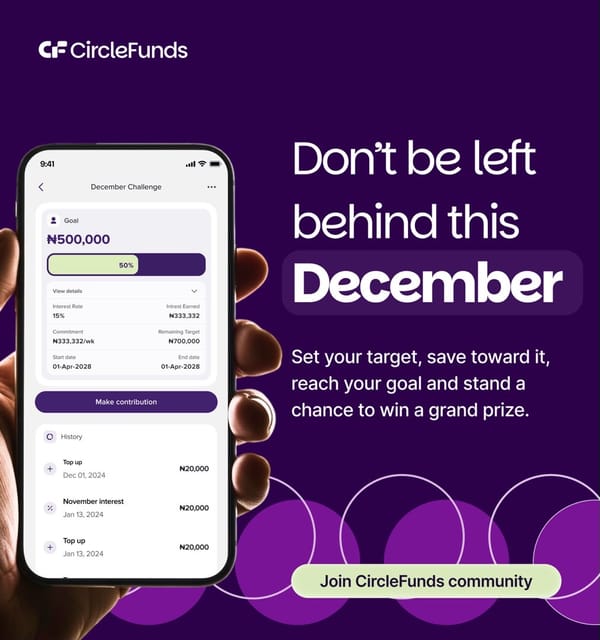
Our December Savings Challenge is also still running until 20 December, so if you have not set your December target yet, this is a good week to do it.
Download the CircleFunds app or update to the latest version to get the new features.