Why Are You Broke by the 6th?

The alert lands and for about four days you feel like a person. You settle what you owe, you buy the things you postponed, you say yes to a few outings. Then you check your account somewhere around the 6th and the number does not make sense.
You were not reckless. You can account for nearly every naira. Yet here you are, three weeks from the next alert, already doing arithmetic.
This is not a discipline problem. It is an order problem.
Everything Loud Gets Paid First
Think about what actually happens in the first seventy two hours after payday. The person you borrowed from gets settled, because they are expecting it. The subscription renews itself. Transport, food and data get topped up. Somebody at home calls. The things that shout get paid, and they shout in the order they arrive, not in the order that matters.
Saving is the only item on that list with no voice. It never calls, never renews itself and never sends a reminder. So it waits until the end of the month, by which time there is nothing to put aside, and the whole thing starts again.
Nobody is failing here. The money simply leaves in the wrong order.
The Yearly Bills Are the Real Trap
The other half of this is timing. Rent lands once a year. School fees arrive in blocks. The big ones feel far away right up until the week they are due, so they never make it into a monthly plan at all. When they finally arrive, they are met with borrowing, and the repayment quietly eats the next few months.
Meanwhile the Central Bank’s September household survey shows most households now concentrating their spending on essentials. When everything goes to essentials, nothing is left for the buffer, and the next unexpected bill becomes borrowed money all over again.
How to Still Have Money on the 20th
1. Write down the first seventy two hours
Not a full budget, just the list of what actually leaves your account in the three days after payday. Most people have never seen this list written down, and it explains the entire month.
2. Pay yourself in the same breath as your bills
Not after them. The same day the alert lands, before the money becomes available for everything else. Treat it as a debt you owe yourself, because that is the only framing that survives contact with a long week.
3. Turn the yearly numbers into weekly ones
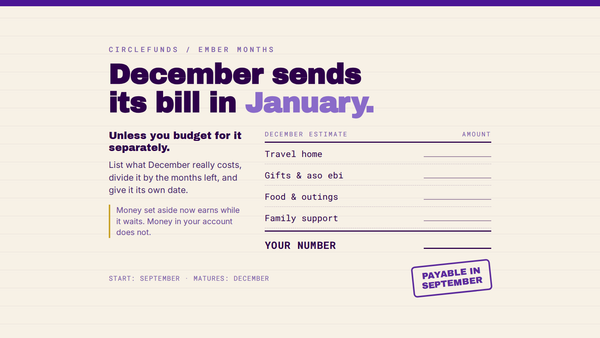
Take your rent and divide it by the weeks between now and renewal. That is what rent actually costs you every week, and it was always that number. You were simply not looking at it.
4. Put it somewhere that is not one tap away
Money in your regular account is not saved, it is just resting. A Target Savings plan commits it until a maturity date you choose and earns up to 15% a year while it waits. That rate is annual and worked out for how long you actually hold the money, so a short plan earns its share of it rather than the full figure. Decide the full amount at the start, because a running plan cannot be topped up later.
5. Use ajo when you need a lump sum sooner than you can save it
If what you need is bigger than what the next few months can produce, a thrift circle hands you the full pot when your turn comes. No interest, no repayment following you around. That is a different tool from saving, and most people need both.
What to Avoid
- Saving whatever is left at the end of the month, because nothing is ever left
- Treating rent and fees as yearly problems instead of weekly ones
- Keeping your goal money in the same account you spend from
- Borrowing to cover a bill you already knew was coming
- Waiting for a bigger salary, since a bigger salary arriving in the same order disappears the same way
Start With the Next Alert
You do not need to earn more before any of this works. You need the money to leave in a different order, starting with the part that goes to you.
Write your seventy two hour list, pick one goal, give it a date, and move it out of reach before the rest of the month gets to it.
Download the CircleFunds app, set your first target, or join a thrift circle and put the order right.